Project Management

Running a small business without a dedicated IT department used to feel like a liability. Now, for most small business owners, it's just reality — and increasingly, it's manageable. The tools available today are built for people who know their industry inside and out but don't have a network engineer on speed dial.
The challenge isn't finding technology anymore. It's knowing which tools actually fit a lean team, and which ones will just add more complexity to your plate. When you're wearing five hats at once, the last thing you need is software that requires a manual to operate.
This guide is for business owners and team leads who are figuring out how to keep operations clean, communication clear, and work moving — all without a single IT ticket. Here's how to do it well.
Why Small Businesses Are Going IT-Free (By Choice)
The shift isn't just about cutting costs. It's about speed and simplicity. Forbes notes that small businesses increasingly rely on cloud-based, self-serve platforms that remove the need for dedicated technical staff. When software is intuitive enough that anyone can onboard themselves, IT becomes optional rather than essential.
In 2026, the expectation for business software has fundamentally changed. People expect tools to work the way their personal apps do — familiar interfaces, quick setup, and no training sessions required. If your team already knows how to use WhatsApp or scroll a social media feed, they already know the mental model behind a lot of modern collaboration tools.
The Real Risks of Running Without IT Support
Before diving into solutions, it helps to be honest about the gaps. Managing a small business without IT isn't without friction — it just means you need to be more intentional about how you fill those gaps yourself.
Scattered Communication
Without IT setting up systems, most small teams default to whatever's easiest — which usually means WhatsApp groups, long email chains, and decisions buried in someone's DMs. Critical updates get missed. Context gets lost between tools. And when someone leaves, so does the history.
No Central Source of Truth
When work lives across five different apps, nobody has a full picture of what's happening. Files are in email attachments. Tasks are in someone's notebook. Updates are in chat threads nobody can find. This is where visibility breaks down — and where mistakes get made.
Security and Data Risks
The FTC's cybersecurity guidance for small businesses highlights that small teams are often the most targeted precisely because they're assumed to have weak defenses. Without IT, security hygiene — strong passwords, two-factor authentication, controlled file access — has to become a habit, not a department.
Building Your Tech Stack Without an IT Team
The goal is a lean stack — a small set of tools that cover communication, task management, and file storage without overlapping or creating new confusion. Think of it as building a clean kitchen, not a restaurant supply warehouse.
Start With One Collaboration Hub
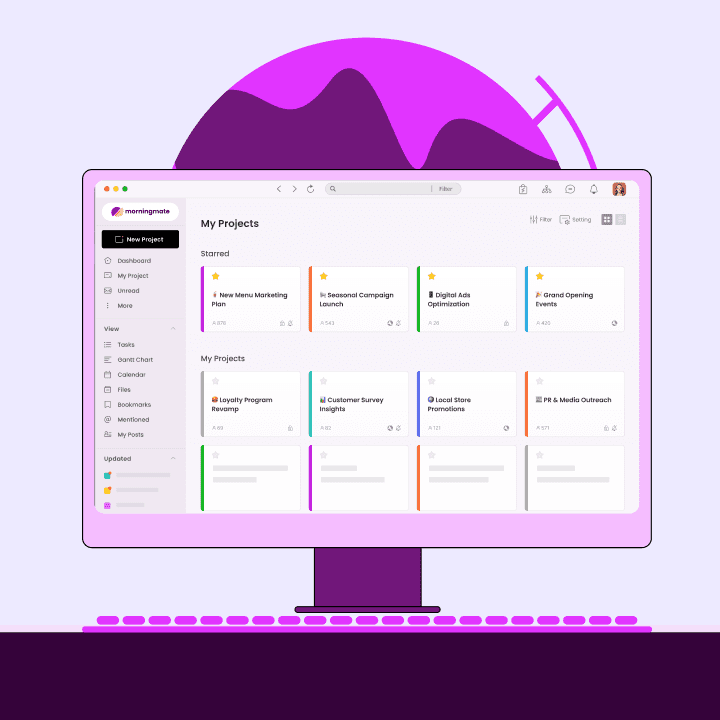
The single biggest upgrade most small businesses can make is consolidating communication and work management into one place. This is where tools like Morningmate make an immediate difference. Morningmate is a lightweight work management tool built for teams that need task tracking and team communication in one workspace — without the setup complexity of tools like Jira or Asana.
Its Feed view works like a social media timeline — posts, updates, and task cards flow naturally in a format your team already understands. There's no learning curve to overcome before people actually start using it.
Replace Personal Messenger Apps With Built-In Chat
One of the fastest wins for a small business is moving team conversations off WhatsApp and into a work-specific channel. When chat lives inside your work tool, context stays attached to the work — not floating in a personal app that mixes business with family group chats.
Morningmate includes a built-in chat that mirrors the WhatsApp interface your team already knows. The transition feels natural, but now conversations are organized, searchable, and actually connected to the tasks they belong to. This is especially useful for remote teams managing async communication across time zones.
Use Cloud Storage, Not Hard Drives
If files live on one person's laptop, your business is one hardware failure away from a crisis. Moving to cloud-based file storage — Google Drive, Dropbox, or tools with built-in file management — means your team can access what they need from anywhere, and nothing gets lost when someone's computer dies.
A Simple Framework for Managing Work Without IT
You don't need a complex process. You need a consistent one. Here's a practical starting point for small business owners building systems without technical support.
Pick one tool for task management and stick to it. Consistency matters more than perfection. If half your team tracks work in the app and the other half tracks it in email, you don't have a system — you have two systems that don't talk to each other.
Set clear naming conventions for files and folders. Without IT enforcing structure, your team has to agree on it. A simple folder structure and consistent file naming saves hours of searching later.
Define how and where updates get shared. Decide whether project updates go in the task feed, the chat channel, or a weekly check-in post — and make sure everyone knows. Ambiguity is what sends people back to WhatsApp.
Do a monthly tool audit. Check whether anyone has added new apps to the mix. The more tools creep in, the more scattered work becomes. Keep the stack lean on purpose.
Assign ownership for each tool. Even without IT, someone needs to be the go-to person for each platform. This doesn't require technical skill — just enough familiarity to help teammates when they get stuck.
Security Basics Every Small Business Can Handle Alone
You don't need a cybersecurity team to protect your business. You need a short checklist that everyone actually follows.
Use a password manager — 1Password and Bitwarden both have affordable small business plans
Enable two-factor authentication on every tool that supports it
Don't share login credentials across team members — each person gets their own account
Review who has access to shared tools when someone leaves the team
Back up critical files to at least two locations
The U.S. Small Business Administration offers a straightforward cybersecurity guide specifically designed for small teams without dedicated IT support — worth bookmarking for your own reference.
What Good Operations Actually Look Like at This Scale
Here's the honest picture: managing a small business without IT isn't about replicating what a large enterprise does with fewer resources. It's about building systems that are simple enough that your team actually uses them — consistently, without friction.
The teams that do this well share a few things in common. They've picked fewer tools and used them more deeply. They've moved work conversations out of personal apps and into a shared workspace. And they've made visibility a priority — so no one is ever left guessing what's happening or where to find something.
Tools like Morningmate are built specifically for this kind of team — the kind where a business owner or operations lead needs a clear view of what everyone's working on, without building a whole IT infrastructure to get there. With 550,000 teams already using it, the setup is intentionally self-serve: no onboarding calls, no implementation fees, no IT department required.
If you're looking at how to bring more structure to your team's day-to-day, a good place to start is choosing the right work management approach for small teams. The simpler the foundation, the faster your team can actually focus on the work that matters.