Project Management

Trust is the invisible infrastructure of every high-performing team. You can have the best project management setup, the clearest goals, and the most talented people in the room — and still watch collaboration fall apart if trust isn't there. When team members don't trust each other, they second-guess decisions, hoard information, and hesitate to speak up. The whole machine slows down.
The good news is that trust isn't a personality trait or something you either have or don't. It's built through consistent, deliberate behavior over time. And as a manager or team lead, you have more influence over this than you might think. The actions you take — and the systems you put in place — shape the environment where trust either grows or erodes.
This guide breaks down how to build trust in a team in a practical, grounded way. No abstract theory. Just real strategies you can start applying this week, whether you're managing a fully remote team, a hybrid setup, or a growing company that's outgrown its informal ways of working.
Why Team Trust Is More Critical Than Ever
Workplace dynamics have shifted dramatically over the past few years. Remote and hybrid work have made visibility harder, communication more fragmented, and relationships thinner. According to Gallup's State of the Global Workplace report, only 23% of employees worldwide are actively engaged at work — and low trust is one of the biggest drivers of disengagement.
Meanwhile, research from Harvard Business Review on the neuroscience of trust found that employees at high-trust companies report 74% less stress, 50% higher productivity, and 76% more engagement than those at low-trust organizations. These aren't soft metrics. They directly affect output, retention, and your team's ability to handle pressure.
In 2026, trust has become even more tied to how transparent and consistent communication is — especially for teams that don't share a physical office. When your team can't see each other working, trust has to be built through clarity, follow-through, and psychological safety.
The Foundations of Trust in a Team
Before jumping into tactics, it helps to understand what trust actually consists of. Most workplace researchers break it down into a few core components.
Competence Trust
This is the belief that your teammates can do their jobs well. People trust colleagues who are reliable, skilled, and follow through on commitments. As a manager, you build competence trust by setting clear expectations, giving people the tools they need, and creating space for them to demonstrate their skills.
Integrity Trust
This comes from consistency between what someone says and what they do. If you commit to something in a meeting and then quietly drop it, people notice. Integrity trust is slow to build and fast to lose. Your word has to mean something — every time.
Benevolence Trust
This is the sense that teammates genuinely care about each other's wellbeing, not just outcomes. It shows up in small moments — checking in when someone seems off, giving credit where it's due, or covering for a colleague who's overwhelmed. Benevolence trust is what transforms a group of individuals into an actual team.
How to Build Trust in a Team: Practical Strategies That Work
Understanding the theory is useful. But trust is built through action. Here are the strategies that make a real difference.
1. Make Communication Transparent and Consistent
One of the fastest ways to erode trust is through information asymmetry — where some people know what's going on and others don't. When updates live in private email threads or personal WhatsApp groups, people are left guessing. That guessing breeds anxiety and suspicion.
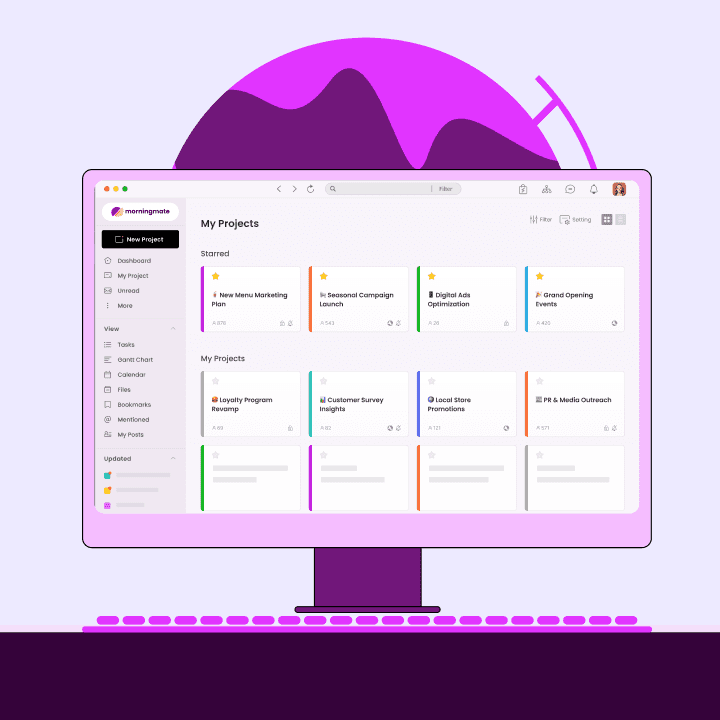
The fix is building a shared, visible space where work updates, decisions, and progress are easy to find. This is where tools like team communication platforms make a tangible difference. Morningmate, for instance, is a workplace collaboration tool that organizes team updates in a social media-style Feed — so instead of hunting through email chains, your whole team can see what's happening in real time, in one place. It replaces the chaos of scattered messages with a structured, shared workspace everyone can actually follow.
2. Follow Through — Every Single Time
Nothing kills trust faster than a manager who says one thing and does another. If you told your team you'd share feedback by Friday, share it by Friday. If you said a process was changing, follow up with the actual change. Reliability is the currency of trust.
Build habits that make follow-through easier. Use task management to track your own commitments, not just your team's. When people see that you hold yourself accountable the same way you hold others accountable, it sets the tone for the entire team.
3. Create Psychological Safety
Google's famous Project Aristotle research identified psychological safety as the single most important factor in team effectiveness. Psychological safety means team members feel safe to speak up, disagree, ask questions, and admit mistakes — without fear of embarrassment or punishment.
You create this by modeling it yourself. Admit when you don't know something. Thank people for raising hard questions. When someone makes a mistake, focus the conversation on what the team can learn, not who's to blame. According to McKinsey research on psychological safety, teams with high psychological safety are significantly more innovative and perform better under pressure.
4. Give Recognition Publicly and Feedback Privately
Recognition is a trust signal. When you call out someone's contribution in front of the team, you're showing that good work gets seen. This matters enormously for motivation — and for the person who did the work feeling like their effort is valued.
Feedback, on the other hand, should be private and specific. Public criticism damages trust and makes people defensive. A simple rule: celebrate wins openly, address issues one-on-one. Keep this consistent and your team will trust that you're fair.
5. Make Work Visible Without Micromanaging
This is a balance many managers struggle with. You want to know what's happening across your team — but hovering and demanding constant status updates signals that you don't trust your people. That breeds resentment, not accountability.
The solution is shared visibility through structure, not surveillance. When tasks and progress are logged in a shared workspace, everyone — including you — can see where things stand without needing to ask. Morningmate's task management feature lets teams assign tasks, set due dates, and track progress in one view, so managers get the visibility they need and team members keep their autonomy. It's a healthier dynamic that actually reinforces trust on both sides. You can also explore async communication strategies to reduce the need for check-in meetings while keeping everyone aligned.
6. Invest in Relationships, Not Just Results
Trust doesn't grow in a purely transactional environment. People need to know each other as humans, not just as roles on an org chart. This is especially true for remote teams where casual interaction doesn't happen naturally.
Build in space for connection. Start meetings with a quick personal check-in. Create channels for non-work conversation. Celebrate team wins, not just project deliverables. These moments feel small but they accumulate into something meaningful over time. Morningmate's built-in chat — which works like a familiar messaging app your team already knows how to use — makes it easy for teams to stay connected informally, without adding another tool to the mix.
7. Address Conflict Directly and Fairly
Unresolved conflict is one of the biggest trust destroyers on a team. When tensions go unaddressed, people take sides, communication breaks down, and the team dynamic fractures. Avoiding conflict doesn't make it go away — it just lets it fester.
When conflict arises, address it quickly and privately. Hear both sides. Focus on the behavior or situation, not the person's character. Once resolved, don't let the incident define the relationship. Your team will trust you more for handling difficult situations with fairness and directness than for pretending they didn't happen.
A Simple Trust-Building Checklist for Team Managers
Use this as a quick self-audit. How many of these are you doing consistently?
I follow through on commitments I make to my team
Work updates and decisions are shared in a place everyone can access
I give recognition publicly and feedback privately
My team feels safe raising concerns or disagreeing with me
I don't hover — my team has autonomy and visibility is built into our workflow
I address conflict directly instead of ignoring it
I make time for relationship-building, not just task updates
I model the behavior I expect from my team
If you checked fewer than five of these, that's a useful signal. Pick one or two to work on this month — building trust in a team is a practice, not a destination.
Trust Takes Time — But It Starts Today
You won't build a high-trust team in a single meeting or a motivational all-hands. Trust is earned through hundreds of small, consistent actions — showing up reliably, communicating honestly, treating people fairly, and creating systems that make collaboration easier and less stressful.
Start with one thing. Maybe it's moving team updates out of WhatsApp and into a shared workspace. Maybe it's making a habit of recognizing good work in front of the team. Maybe it's scheduling a one-on-one this week with someone you haven't connected with in a while. Small shifts, done consistently, compound into something that genuinely changes how your team works together.
If you're looking for tools to support this, explore remote team management strategies and see how a more organized workspace can remove friction from your day-to-day. A team that trusts each other — and trusts their manager — will outperform almost any other team you put against them. That's worth building.