Project Management

If you're managing a small business or a growing team, you've probably felt the pain of tracking inventory in one place and tasks in another — and watching them slowly drift out of sync. A supplier confirms a shipment, but nobody updates the task list. Stock runs low, but the person responsible is chasing a different thread buried in email. The whole operation starts to feel fragile.
The good news: you don't need a complicated, expensive system to fix this. Free inventory and task tracking tools — when used together smartly — can give even a lean team the visibility and coordination they need to stay ahead. The key is knowing what to look for, how to set it up, and how to keep your team actually using it.
This guide walks you through practical ways to combine inventory tracking with task management without drowning in software subscriptions or onboarding headaches.
Why Inventory and Task Tracking Break Down Separately
Most teams treat inventory tracking as a data problem and task management as a people problem. In reality, they're the same problem: keeping work coordinated around the things that matter. When those two systems don't talk to each other, gaps appear fast.
Think about a small retail or e-commerce operation. The warehouse team logs stock levels in a spreadsheet. The operations lead assigns reorder tasks in a separate app. By the time someone notices the disconnect, you've either over-ordered or gone out of stock entirely. According to McKinsey's research on supply chain operations, poor visibility across inventory and workflow is one of the top drivers of operational inefficiency in growing businesses.
The fix isn't always more software. Often it's about connecting the workflow so that inventory status triggers the right tasks automatically — or at least makes it obvious who needs to act and when.
What Free Inventory + Task Tracking Actually Needs to Do
Before you pick any tool or build any system, get clear on the job it needs to do. A free solution that works for a 10-person team looks very different from one built for a 100-person operation. Here's a practical baseline of what your combined system should cover:
Track item quantities, locations, and status in real time (or close to it)
Assign tasks tied directly to inventory actions — reorders, audits, receiving, returns
Notify the right person when a threshold is crossed or a task is due
Keep a clear record of who did what and when
Be simple enough that your whole team will actually use it
That last point is the one most teams underestimate. A powerful tool nobody uses is worse than a simple tool everyone does.
Free Tools Worth Knowing About
Spreadsheets as an Inventory Foundation
Google Sheets and Excel remain genuinely useful for inventory tracking at small scale — especially when you build them with clear columns for SKU, quantity on hand, reorder point, supplier, and last updated date. The real limitation isn't the spreadsheet itself; it's that a spreadsheet has no way to alert your team or assign follow-up work.
Use a spreadsheet as your inventory ledger, but pair it with a task management layer that handles the human side — who needs to act, by when, and whether it's done.
Dedicated Free Inventory Apps
Tools like Sortly (free tier), inFlow Inventory (free plan), and Zoho Inventory (free for small volumes) give you structured inventory tracking with category management, barcode support, and basic reporting. They're purpose-built, which means less setup work than a spreadsheet.
The gap most of these tools share: they track stock well but don't give you a way to manage the tasks around that stock. For that, you need to layer in a task management tool that your team actually checks every day.
Task Management Tools That Work Alongside Inventory Systems
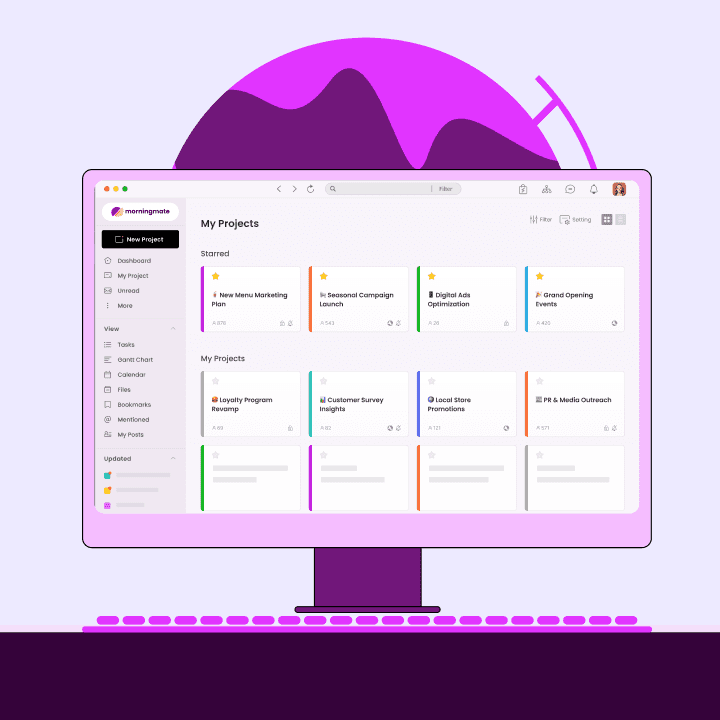
This is where tools like Morningmate come in. Morningmate is a lightweight work management platform that combines task management with a built-in team chat — so your team can coordinate on inventory-related tasks without jumping between five different apps. You can create tasks for reorders, assign them to specific team members, attach relevant files or supplier information, and track progress all in one place.
What makes it especially practical for non-technical teams is the interface: it looks and works like a social media feed and a familiar chat app, so there's almost no learning curve. Teams that previously relied on WhatsApp groups or email chains for work coordination tend to transition easily.
How to Build a Simple Free Inventory + Task Tracking System
Here's a practical setup that works for most small-to-mid-sized teams without requiring any paid software.
Step 1: Set Up Your Inventory Ledger
Start with a Google Sheet or a free inventory app. Create a clean structure with these core fields:
Item name and SKU or ID
Current quantity
Reorder point (the quantity that triggers a reorder task)
Preferred supplier and lead time
Location (warehouse, shelf, bin, etc.)
Last updated date and by whom
Keep this simple. The goal is a single source of truth your whole team can reference, not a complex database.
Step 2: Define Your Inventory-Linked Tasks
Map out the recurring tasks that connect to inventory events. Common ones include:
Reorder task when stock hits the reorder point
Receiving and quality check task when a shipment arrives
Monthly or quarterly audit task
Return or disposal task for damaged stock
Supplier follow-up task for delayed orders
For each task type, document who owns it, what done looks like, and where the outcome should be recorded. This is the workflow design work that most teams skip — and then wonder why things fall through the cracks.
Step 3: Connect Your Inventory to Your Task Layer
This is the critical bridge. Whenever an inventory event happens — stock drops below reorder point, a shipment is received, an item is flagged — a corresponding task needs to be created and assigned. You can do this manually if your team is small, or use simple automation (like Google Sheets notifications or Zapier integrations) to trigger task creation in your task management tool.
If your team is using Morningmate, you can create a dedicated project or workspace for inventory operations. Each inventory event gets logged as a task with an assignee, due date, and any relevant files attached — like supplier invoices or delivery confirmations. The built-in chat means team members can ask questions and share updates directly within the task context, rather than switching to WhatsApp and losing the thread.
Step 4: Set a Cadence for Reviews
No system stays accurate without a review rhythm. Build these into your team's regular schedule:
Daily: Anyone receiving or moving stock updates the ledger same day
Weekly: Operations lead reviews open inventory-related tasks and clears blockers
Monthly: Physical count spot-check against the ledger to catch drift
Quarterly: Full audit and system review — are the reorder points still accurate? Are tasks being completed on time?
This cadence keeps the system honest without creating a heavy administrative burden.
Common Mistakes to Avoid
Even with a solid setup, teams run into predictable problems. Here are the ones worth avoiding from the start.
Letting Updates Pile Up
Inventory data is only useful if it's current. The most common failure mode is letting updates accumulate — people intend to log changes but do it in batches, or not at all. Make the update step part of the physical action: receive the item, update the count. Move the item, update the location. Build it into the habit, not the end of the day.
Assigning Tasks Without Clear Ownership
Research from Harvard Business Review consistently shows that tasks without a single named owner are far more likely to go incomplete. "Someone needs to reorder the printer paper" is not a task. "Maria to reorder printer paper by Thursday" is a task. The difference is accountability, and it's the difference between something getting done and something getting forgotten.
Over-Engineering the System
It's tempting to build something elaborate when you're setting up a new system. Resist it. Start with the minimum viable version and add complexity only when you hit a real limitation. A simple system your team actually uses will always outperform a sophisticated one that becomes background noise.
Scaling Up: When Free Tools Stop Being Enough
Free inventory and task tracking solutions work well up to a point. As your team grows or your inventory complexity increases, you'll start hitting real limits — more items than a spreadsheet handles cleanly, more team members needing concurrent access, or reporting needs that basic tools can't meet.
The signal to scale isn't a specific headcount or SKU count — it's when your team starts working around the system instead of within it. If people are maintaining shadow spreadsheets, texting each other outside the task tool, or regularly discovering that the ledger doesn't match reality, it's time to invest in something more robust.
That said, many teams grow much further than they expect on simple, well-maintained free tools. Forbes notes that small businesses that invest in basic operational systems early — even simple ones — consistently outperform those that delay structuring their workflows. Getting started matters more than getting it perfect.
Bringing It All Together
Free inventory and task tracking isn't about finding one magical app that does everything. It's about building a simple, connected system where inventory status and team tasks stay in sync — and everyone knows what they're responsible for.
Start with a clean inventory ledger. Layer task management on top. Define clear ownership for every recurring action. Review regularly. And choose tools your whole team will actually open every day — not just the ones on a software comparison list.
For teams that are still coordinating on WhatsApp or email, even a small step toward a dedicated workspace makes a visible difference. Tools like Morningmate — which brings task management and team chat into a single, familiar interface — give operations teams a practical starting point without requiring weeks of setup or a technical background to use.
The best system is the one your team will use consistently. Start simple, stay consistent, and improve from there.