Project Management
Construction projects fail not because of bad workers or poor materials — they fail because of broken communication. The field crew finishes a foundation pour, but the project manager back at the office doesn't know until two days later. A subcontractor shows up expecting cleared ground, but the site lead is still waiting on approval. These gaps between field and office teams are where budgets bleed and timelines collapse.
Construction site task management is one of the most overlooked levers in the industry. Most teams still rely on morning phone calls, WhatsApp group chats, and spreadsheets that go stale before lunch. The result? No one has a clear, shared view of what's done, what's blocked, and what's next.
If you're running a construction operation — whether you're a project manager, site supervisor, or operations lead — this guide is for you. We'll walk through why field-office alignment breaks down, what it actually costs you, and how to build a system that keeps every team member working from the same truth.
Why Field and Office Teams Fall Out of Sync
The construction industry has a structural communication problem. Field teams work in fast-moving, physical environments where conditions change by the hour. Office teams operate on schedules, contracts, and documents. These two worlds rarely share the same rhythm — and without a deliberate system to bridge them, misalignment becomes the default.
The Information Lag Problem
When a site supervisor updates a task status via text message or a verbal handoff, that information doesn't automatically reach the project manager, the procurement team, or the client. By the time it filters through, it's often outdated. McKinsey has reported that construction is one of the least digitized industries in the world, and poor data flow is a leading cause of project overruns.
The lag isn't just about speed — it's about accuracy. When updates travel through multiple people or informal channels, they lose context. A "nearly done" status means something very different to the crew on-site versus the project manager drafting a client update.
Tool Fragmentation Makes It Worse
Most construction teams use a patchwork of tools: WhatsApp for quick updates, email for formal approvals, spreadsheets for task tracking, and phone calls for anything urgent. None of these tools talk to each other. When something falls through the cracks — and it always does — no one can trace where the breakdown happened.
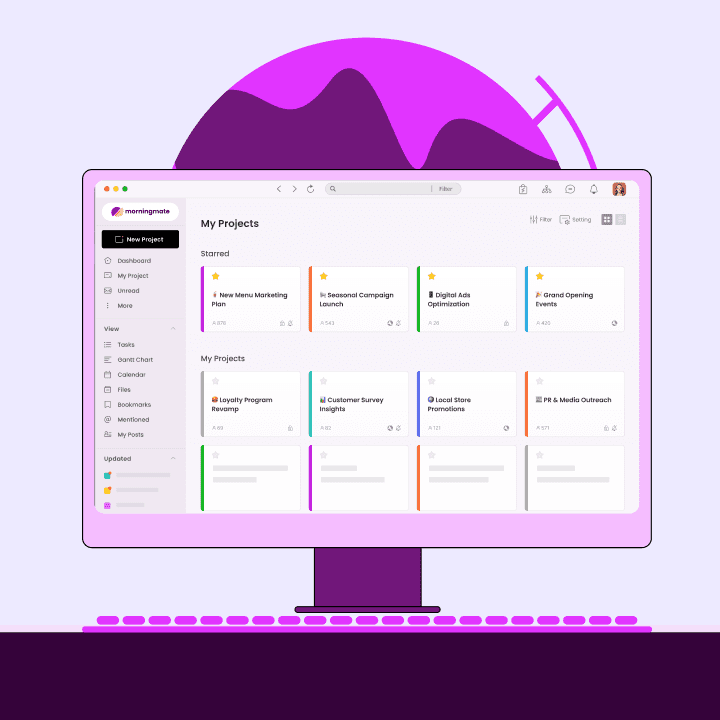
This is exactly the kind of chaos that a tool like Morningmate is designed to replace. Instead of juggling three or four apps, your team gets one workspace with built-in chat, task tracking, and file sharing — all in one place, with an interface that feels as familiar as WhatsApp but structured for real work.
What Poor Alignment Actually Costs You
It's easy to treat communication gaps as a soft problem — frustrating but manageable. The numbers tell a different story. A widely cited industry report found that poor communication leads to project failure 31% of the time, making it one of the top causes of cost overruns and delays in construction.
Beyond hard costs, misalignment erodes team trust. When field crews feel ignored by the office, or when the office feels like the site is a black box, you end up with two teams working in parallel rather than together. Morale drops. Accountability gets murky. And the project manager ends up firefighting instead of managing.
Common Symptoms of Poor Field-Office Communication
Duplicate work because two teams didn't know the other had already started
Delayed approvals because requests got buried in email threads
Procurement mistakes driven by outdated site progress reports
Subcontractors arriving on-site without clear task assignments
Last-minute scope changes that never reached the field crew
If any of these sound familiar, it's a sign that your task management system needs to be rebuilt around real-time visibility — not just better habits.
A Practical Framework for Construction Site Task Management
Getting field and office teams aligned isn't about buying the most powerful software. It's about building a shared system that both teams will actually use. Here's a framework you can put into practice immediately.
Step 1 — Create One Source of Truth for Every Task
Every task on a construction project should live in one place — not in someone's head, not in a text message, and not in a spreadsheet only the PM can access. Each task should have a clear owner, a due date, and a current status that anyone on the team can see.
When you use a task management tool that both field and office teams access, you eliminate the need for status calls and follow-up texts. The information is already there. Updates happen in context, attached to the task they belong to.
Step 2 — Separate Communication Channels by Purpose
Not every message needs to go to everyone. A quick site update doesn't belong in the same thread as a formal client approval request. Structure your communication by creating distinct channels: one for site crew daily updates, one for project managers and coordinators, one for subcontractors, and one for urgent issues.
Morningmate's built-in chat lets you create these channels directly alongside your task boards, so conversations stay linked to the work they're about. No more digging through a 200-message WhatsApp group trying to find that photo someone shared three days ago.
Step 3 — Standardize Daily Updates From the Field
One of the most effective changes you can make is requiring a brief daily update from each site lead — not a long report, just a structured summary. This doesn't need to be complicated. A simple format works well:
What was completed today — specific tasks, not vague progress
What's blocked — anything waiting on materials, approvals, or other teams
What's planned for tomorrow — so the office can prepare and coordinate
When these updates are posted into a shared workspace rather than sent as individual messages, everyone who needs to know can see them without being explicitly notified. It shifts the burden from chasing updates to checking a live feed.
Step 4 — Give Field Teams a Simple Way to Flag Issues
Issues on a construction site escalate fast when no one is watching. A small problem caught on Monday morning costs far less than the same problem noticed on Thursday afternoon. Your system needs to make it genuinely easy for field workers to raise a flag — not file a formal report, not call the project manager, just tag an issue and attach a photo.
This is where interface simplicity matters enormously. If your task management tool is too complicated for a site supervisor to use between tasks, they won't use it. Tools built for non-technical teams — like Morningmate's feed view, which works like a familiar social media timeline — lower the barrier enough that field adoption actually happens.
Step 5 — Run a Short Weekly Sync Between Field and Office Leads
Technology doesn't replace human alignment — it makes it faster. A 20-minute weekly call between the site lead and the project manager, anchored to a shared task board, goes a long way. Everyone shows up with the same information in front of them, so the conversation is about decisions, not status updates.
You can use this time to reprioritize tasks, resolve blockers, and flag anything that needs escalation before it becomes a problem. Keep notes from these calls in your shared workspace so nothing gets lost after the call ends.
What to Look for in a Task Management Tool for Construction Teams
Not every project management tool suits construction. Some are designed for software development teams and bring complexity that field crews will simply ignore. When evaluating options, keep these criteria in mind.
Ease of Use for Non-Technical Users
Your site crews are skilled tradespeople — they shouldn't need training sessions to log a task update. Look for tools with clean, intuitive interfaces that anyone can pick up quickly. If it takes more than five minutes to teach someone the basics, it's probably too complex for field adoption.
Mobile-First Design
Field teams don't work at desks. Your task management tool needs to work just as well on a phone as it does on a laptop. Photo attachments, status updates, and chat messages should all be accessible from the job site without friction.
Integrated Chat and Task Management
When chat and tasks live in separate tools, context gets lost. An integrated workspace — where a conversation about a task is right next to the task itself — keeps communication organized and searchable. This is one of the reasons teams switch from WhatsApp and email to purpose-built collaboration tools.
Visibility Across the Whole Project
Project managers and operations leads need to see across multiple work streams at once. A tool that shows you everything in a single view — what's on track, what's blocked, and what's overdue — saves hours of chasing status updates every week. Morningmate's workspace gives operations leads exactly this kind of cross-team visibility without requiring complex setup or ongoing administration.
Building a Culture of Alignment on Construction Projects
Tools and frameworks only work when the team culture supports them. Even the best task management system fails if people don't trust it or feel pressure to bypass it. Building genuine field-office alignment requires a few deliberate cultural habits.
Make Updates the Norm, Not the Exception
When task updates are expected and normalized, they stop feeling like extra work. Tie daily updates to your team's existing rhythm — end of shift, morning standup, or whatever already happens naturally. Over time, it becomes habitual.
Acknowledge What the Field Team Reports
Nothing kills field team engagement faster than feeling like their updates disappear into a void. When site crews flag an issue or complete a task, the office team should acknowledge it. A quick reply or a task status change signals that the system is working — and that the field team's input matters.
Treat Blockers as Shared Problems
Research consistently shows that teams perform better when they feel shared ownership over problems rather than blame for them. When a field crew reports a blocker, the office team's job is to remove it quickly — not to interrogate how it happened. That mindset shift, more than any tool, is what keeps field and office teams genuinely aligned.
A Quick Checklist: Is Your Team Actually Aligned?
Use this checklist to assess where your field-office alignment stands right now.
Every active task has a named owner and a current status visible to both field and office teams
Field teams can update task status and flag issues from their phones without needing to call anyone
There is one shared communication channel per project — not a mix of WhatsApp, email, and SMS
The project manager can see a summary of today's site progress without making a single phone call
Blockers are logged and assigned to someone responsible for resolving them
Weekly field-office syncs are happening and grounded in a shared task view
New team members or subcontractors can get up to speed on project status within 10 minutes
If you checked fewer than four of these, your project is likely carrying more risk than it needs to. The good news is that most of these gaps are fixable with better systems — not more people.
Construction site task management doesn't have to be complicated. It just has to be consistent, shared, and simple enough that every member of your team — from the site supervisor to the project coordinator — actually uses it every day. Start with a single source of truth, build the habit of daily updates, and choose tools that work as well on a muddy job site as they do in a quiet office.